
AGVs & AMRs
Autonomous Forklifts & Mobile Robots
Automate pallet transport, stacking, storage, and material movement with intelligent vehicles integrated into your warehouse operations.
 Featured technology partner: VisionNav Robotics
Why Autonomous
The same move, done right every time
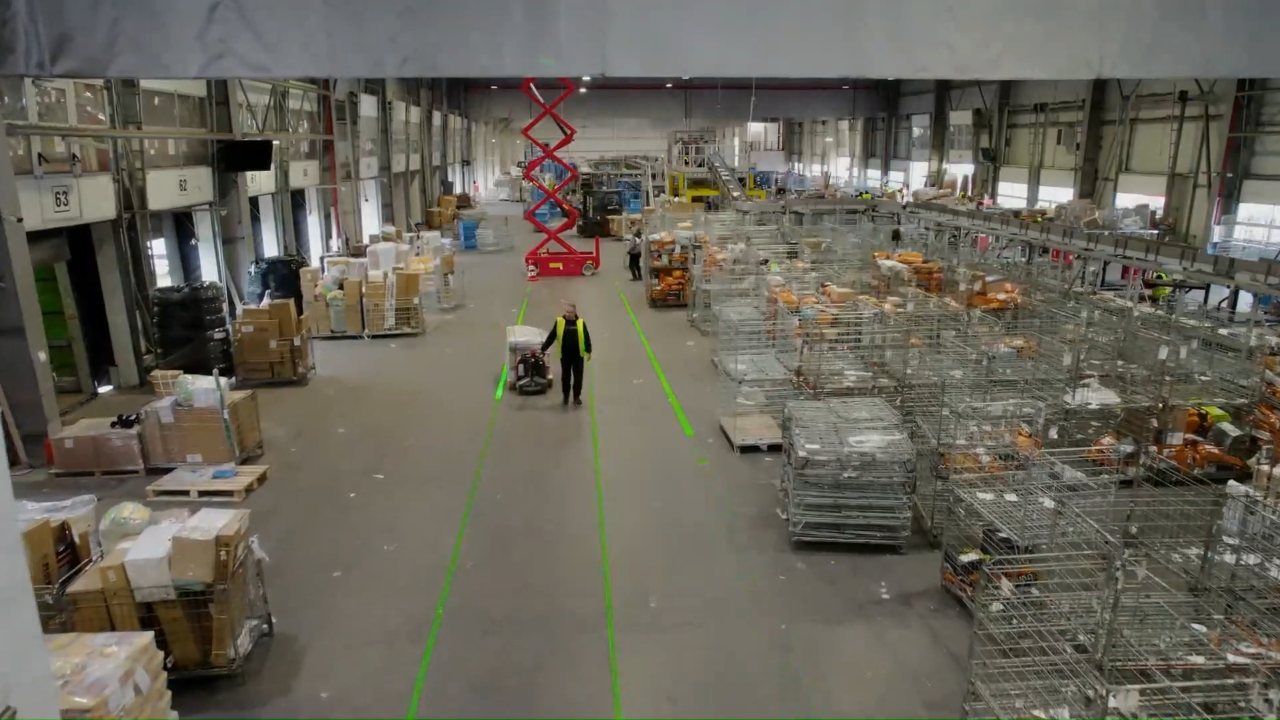
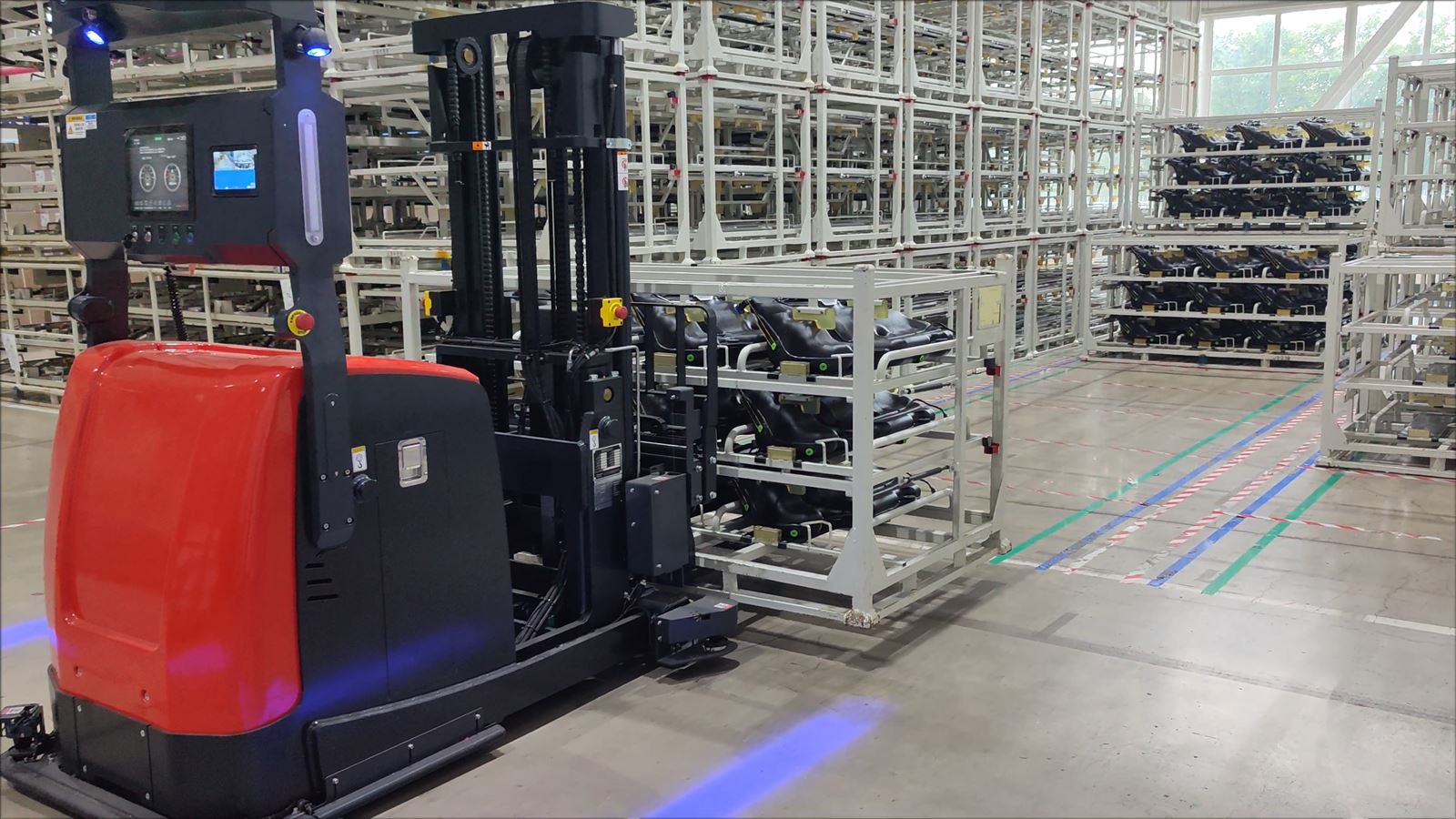
Most pallet moves are repetitive: dock to staging, staging to racking, line to warehouse. Autonomous forklifts and robots take those runs over, so your drivers can focus on the work that needs judgment.
Application Explorer
What would you like to automate?
Start with the task, not the model number. Pick one to see the equipment that fits.
Your application
Pallet Transport
Horizontal pallet moves between docks, staging, storage, and production, around the clock.
Your application
Stacking
Pick up, stack, and put away pallets on the floor, in block stacks, or in low racking.
Your application
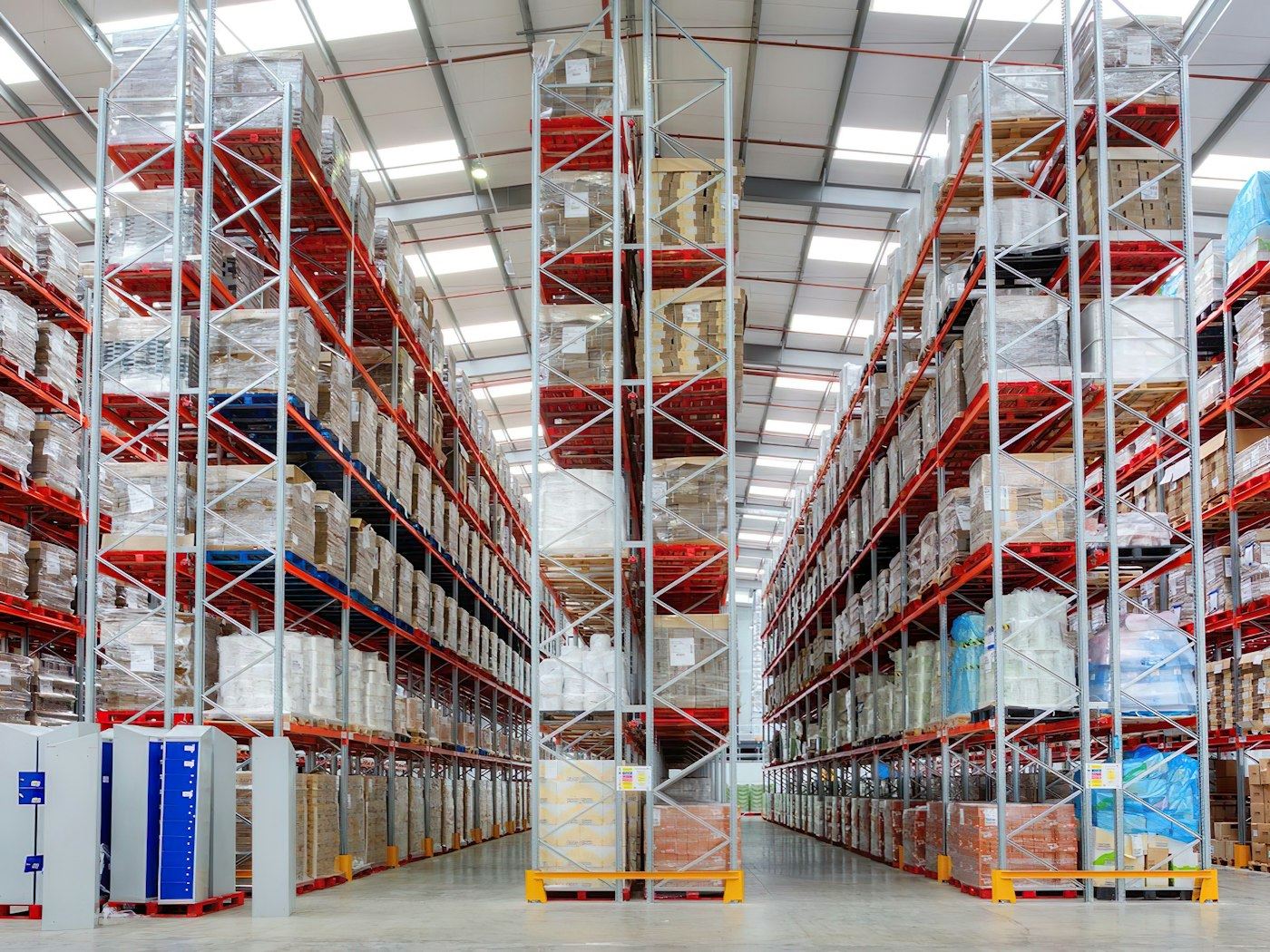
High-Bay Storage
Store and retrieve loads from elevated rack positions, up to 11.2 m.
Equipment to explore
Your application
Production Supply
Deliver materials to line-side and take finished goods away, on a schedule or on demand.
Your application
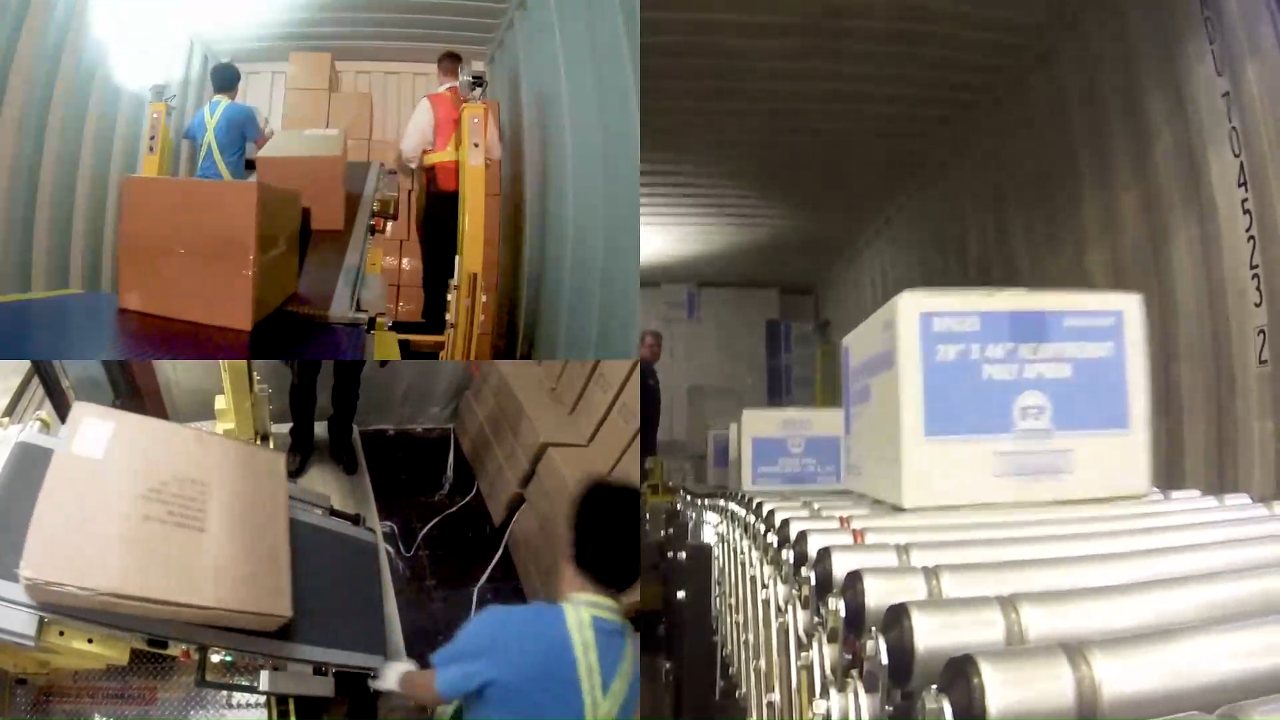
Trailer Loading & Unloading
Load and unload palletized trailers and move pallets between the dock and staging.
Your application
Cart Towing
Pull trains of carts across large facilities, between zones and buildings.
Equipment to explore
Illustrative matching only. Final recommendations depend on load, lift height, facility layout, and operating conditions.
Equipment Explorer
Explore our autonomous equipment
Four families of vehicles, each built for a different kind of move. Open a series for its models and specifications.
Autonomous Forklifts
Counterbalance, stacking, reach, and narrow-aisle applications
Explore forklifts →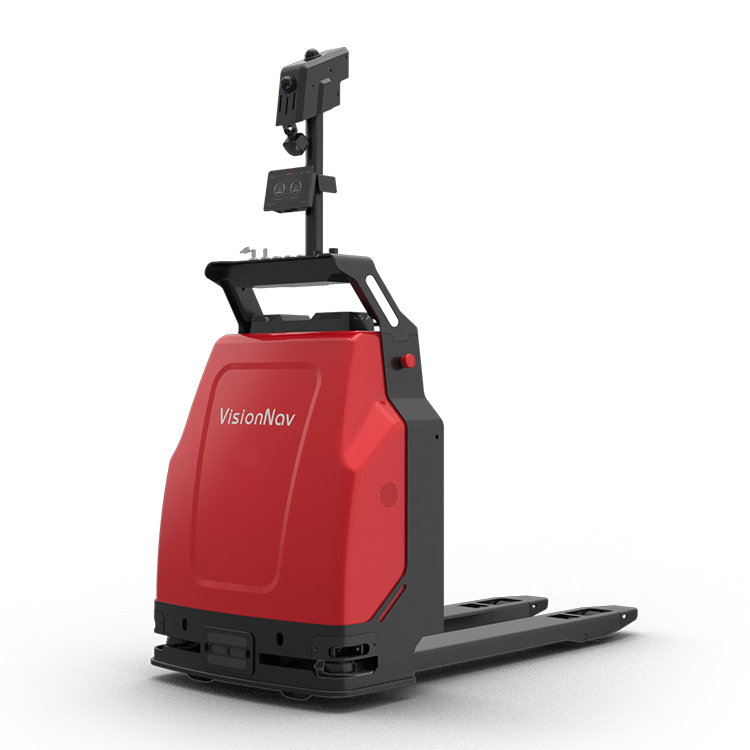
Autonomous Pallet Movers
Automated floor-level pallet transport
Explore pallet movers →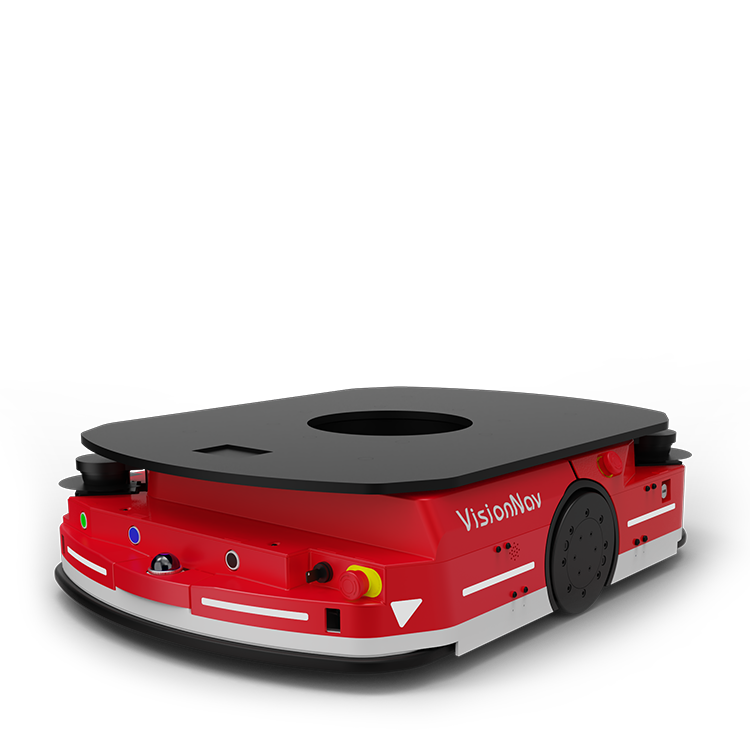
Mobile Robots
Flexible movement of loads and carts
Explore mobile robots →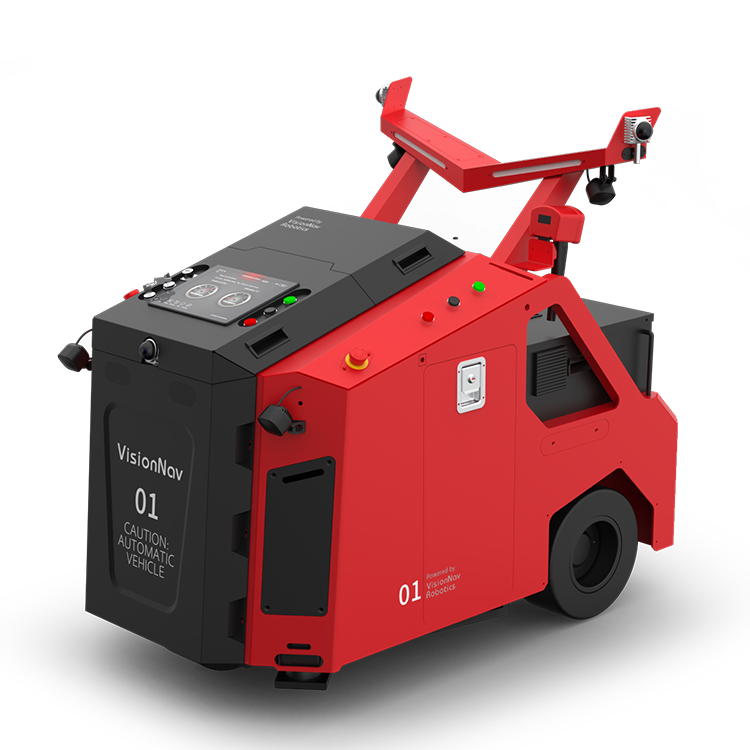
Autonomous Tuggers
Automated towing of carts and material trains
Explore tuggers →Autonomous Forklifts
Counterbalance, stacking, reach, and narrow-aisle applications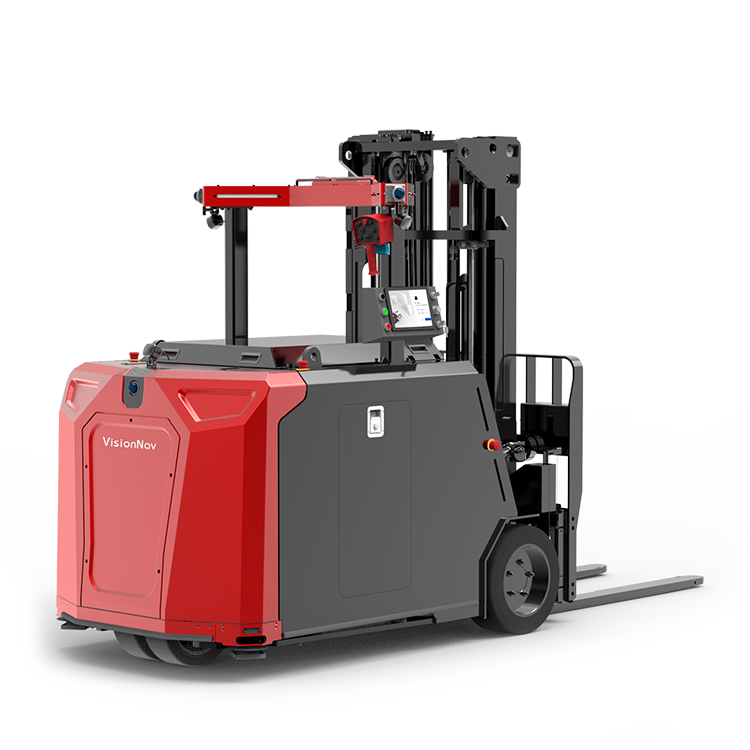
VNE Series
Autonomous counterbalance forklifts
General-purpose pallet lifting, transport, and stacking, from standard loads to heavy loads in container and dock areas.
View series →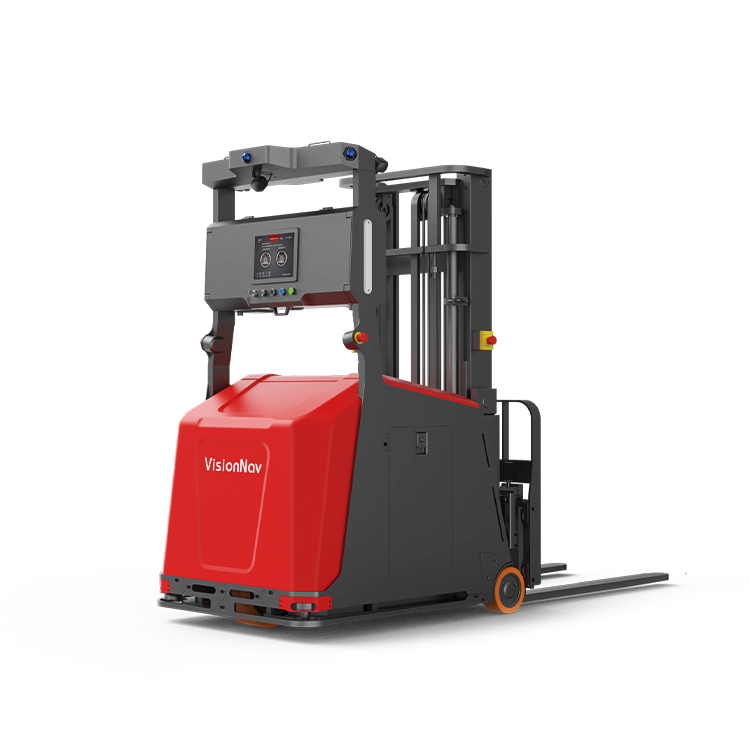
VNP Series
Autonomous pallet stackers
Pallet and cage handling with stacking up to 4.5 m, docking with your WMS.
View series →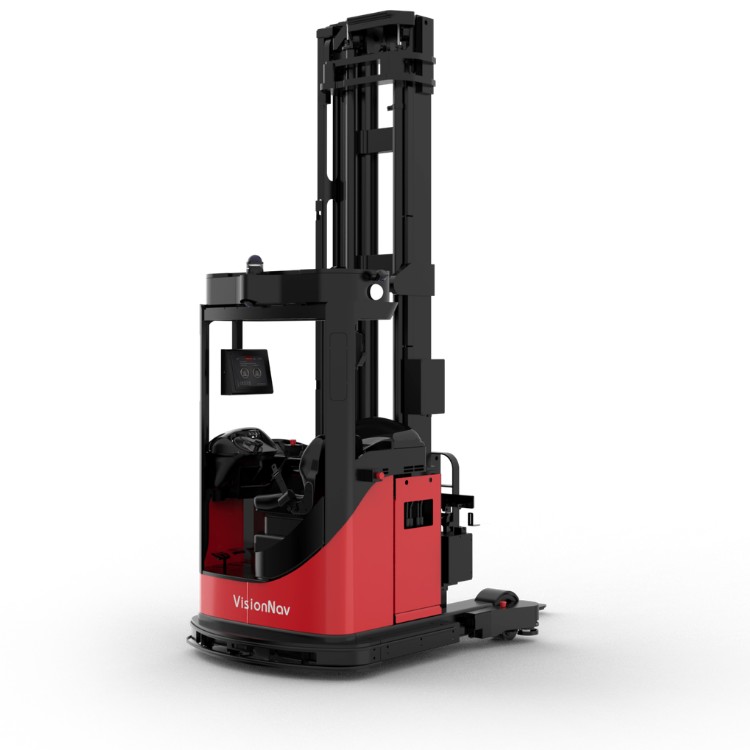
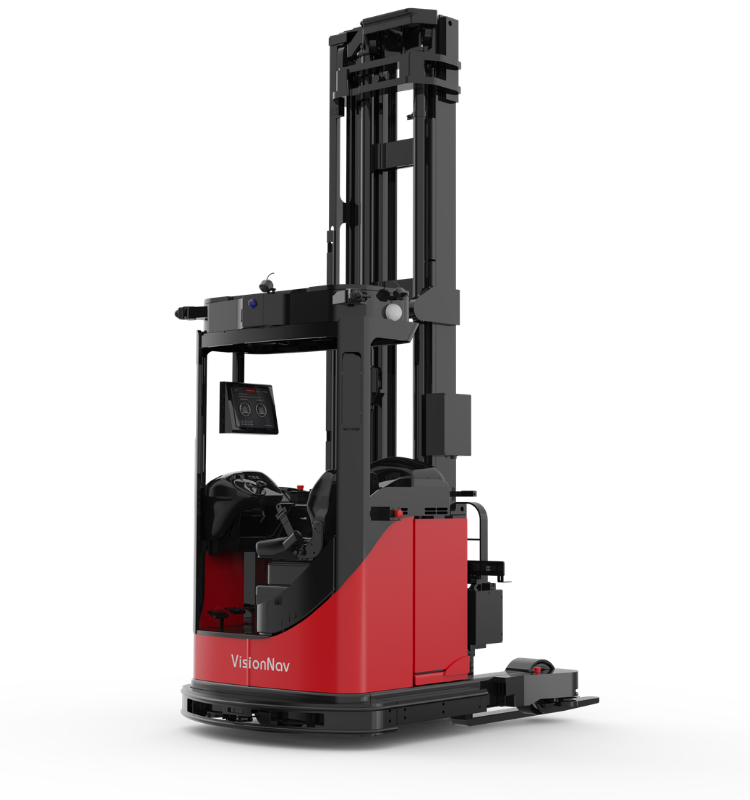
VNR Series
Autonomous reach trucks
Putaway and retrieval in high-bay racking, up to 11.2 m, indoors and outdoors.
View series →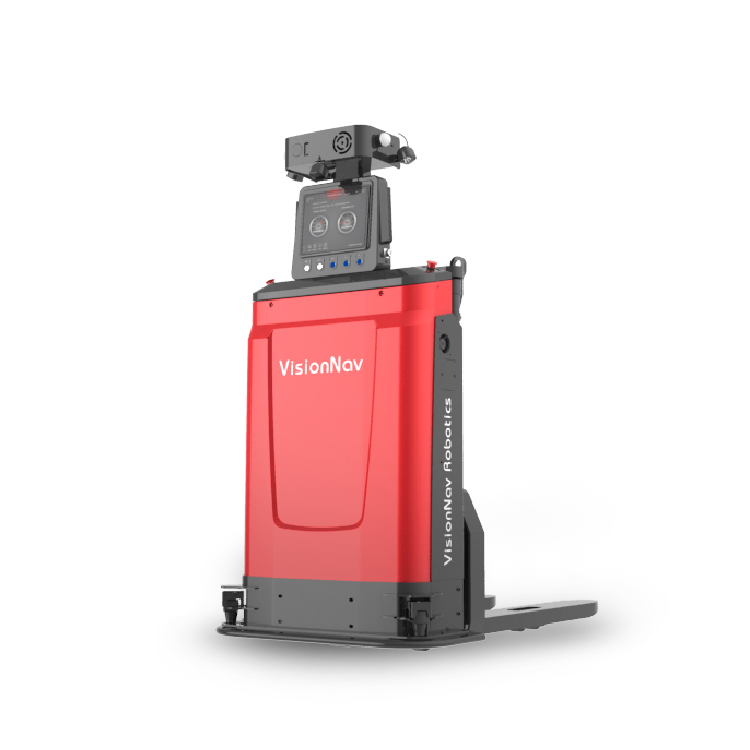
VNSL Series
Autonomous narrow-aisle forklifts
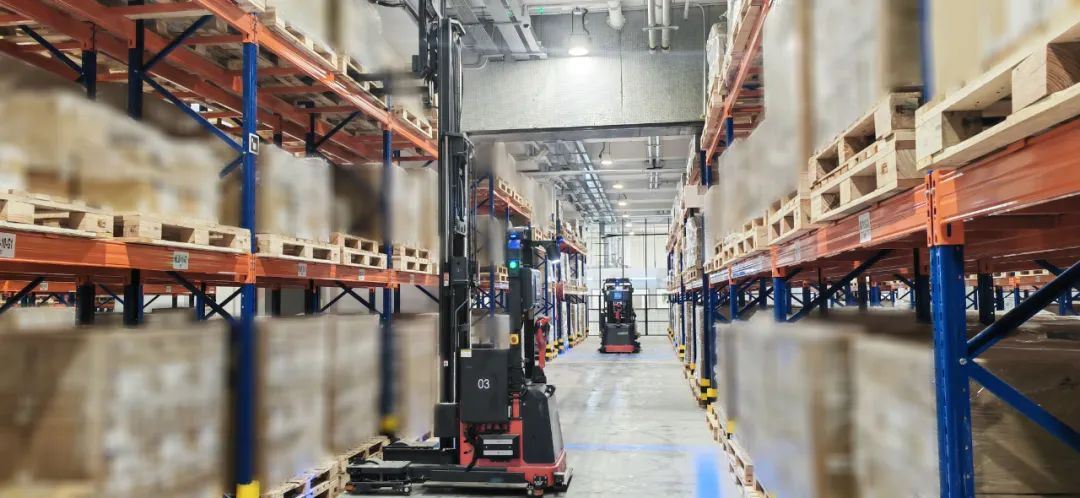
Pallet transport in aisles as narrow as 1.8 m, with one-key switching between manual and autonomous.
View series →Autonomous Pallet Movers
Automated floor-level pallet transport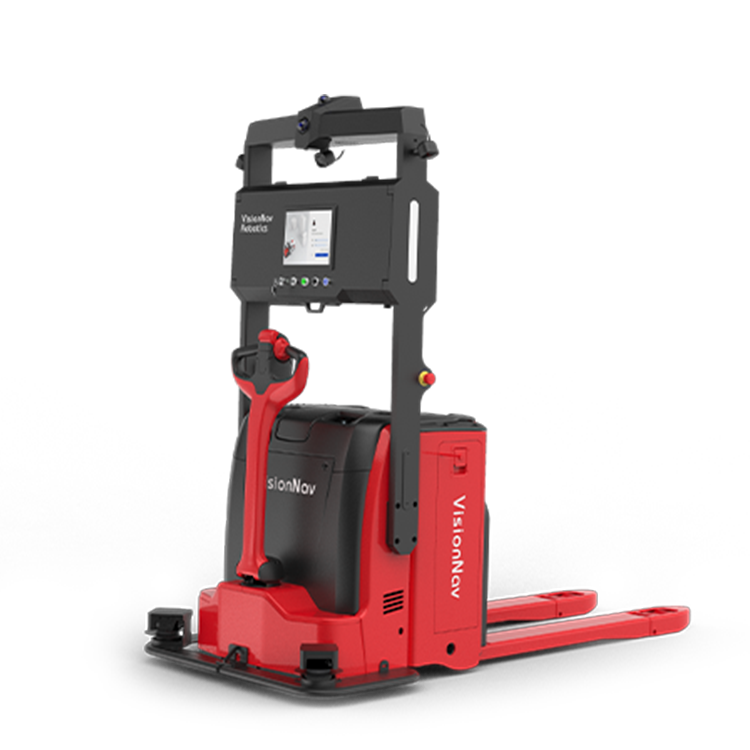
VNT Series
Autonomous pallet jacks
Heavy horizontal moves of pallets and cages between the dock, staging, and line-side.
View series →VNST Series
Compact autonomous pallet movers
Compact floor-level pallet handling in tight spaces, and the base of VisionNav’s trailer loading system.
View series →Mobile Robots
Flexible movement of loads and cartsVNK Series
Low-profile mobile robots
Slides under carts and loads to move them between workstations, assembly lines, and staging areas.
View series →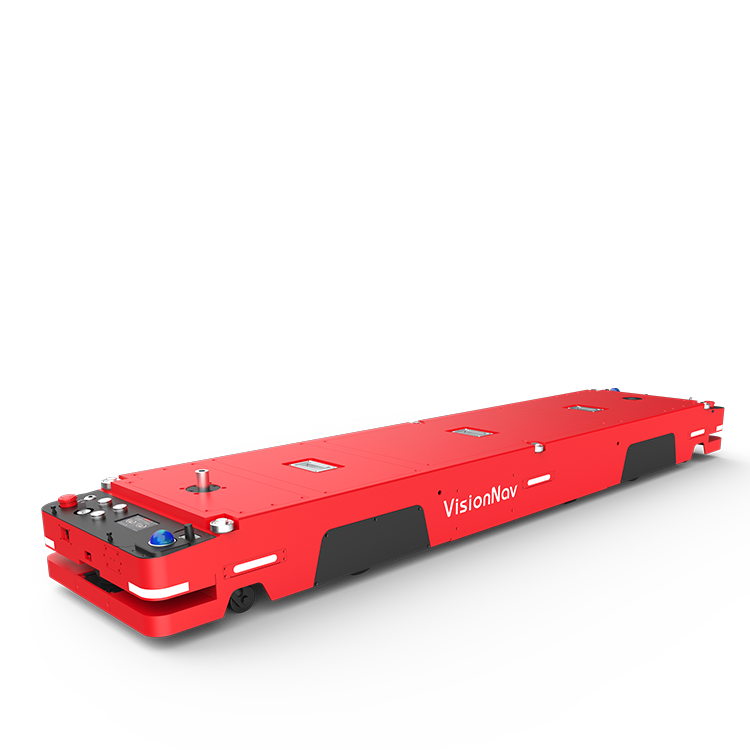
VNKQ Series
Narrow-passage haulers
A slim, elongated hauler for narrow lanes and tight layouts where larger vehicles cannot go.
View series →Autonomous Tuggers
Automated towing of carts and material trains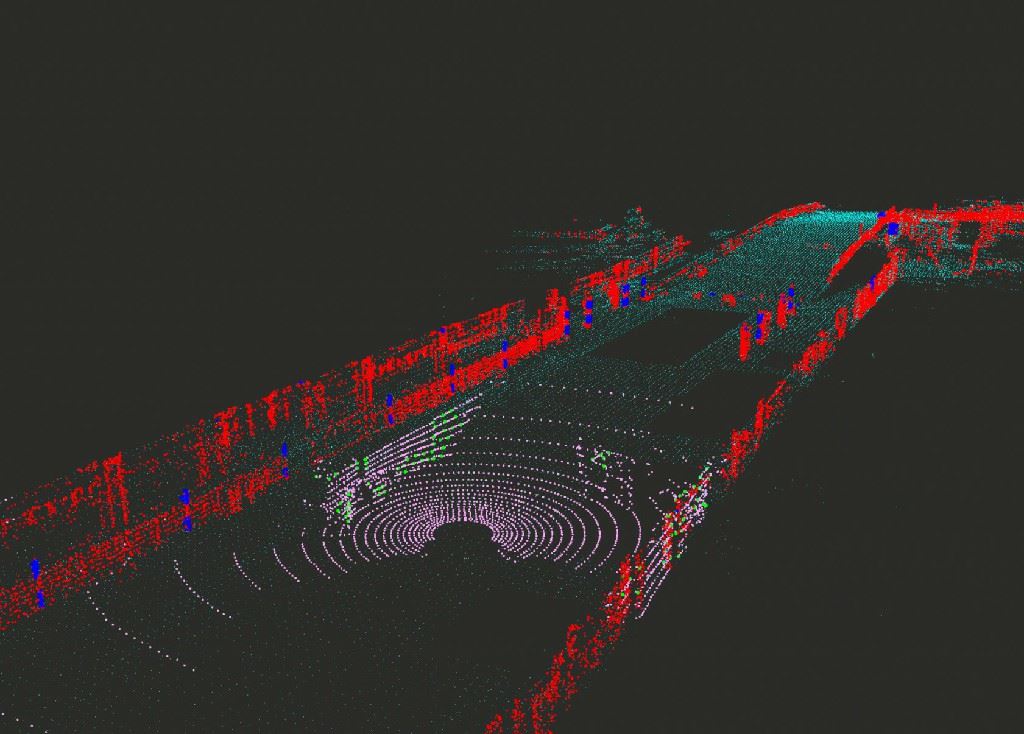
Navigation
How the vehicles find their way
VisionNav vehicles navigate with 3D vision and SLAM, matching what they see to a map of your site. No reflectors, magnets, or floor tape to install.
- 01
See
3D cameras and lidar build a live picture of racks, pallets, people, and obstacles.
- 02
Locate
The vehicle matches that picture to the site map to know exactly where it is.
- 03
Act
It finds the pallet pockets, picks and places the load, and slows or stops for anything in its path.
Manual vs. Autonomous
What changes on the floor
The same pallet moves, done two ways.
| Manual forklifts | Autonomous vehicles | |
|---|---|---|
| Availability | Limited by shifts, breaks, and staffing | Runs across shifts and charges between tasks |
| Consistency | Varies from driver to driver | Same route, speed, and placement every time |
| Safety | Depends on the driver’s attention | Sensors slow and stop the vehicle for people and obstacles |
| Product and rack damage | Impacts from rushed or misjudged moves | Precise, repeatable pick and place |
| Traceability | Paper or scanner records | Every move logged in the fleet system |
| Labour | Skilled drivers are hard to hire and keep | Drivers move to work that needs judgment |
Technology & Integration
How autonomous material flow works
Every move starts as a task in your warehouse system and ends with a confirmed delivery. In between, the fleet software assigns the vehicle and the vehicle does the rest.
Task request
Your WMS or MES sends a move: what, from where, to where.
Fleet control
The fleet system assigns the best vehicle, coordinates the fleet, and tracks every task.
Vehicle
The vehicle navigates by 3D SLAM, finds the pallet, and picks it up.
Delivery
It places the load and reports completion back to your system.
Mapping & navigation
Vehicles map the site with 3D laser and vision sensors and navigate by its natural features, so no reflectors, magnets, or floor tape are needed. VisionNav designs them for indoor, outdoor, all-weather, and changing environments.
Fleet management
VisionNav’s Robot Control System manages vehicles, tasks, instructions, and exceptions on a live map, keeps a record of every task, and coordinates fleets of up to hundreds of vehicles.
Safety systems
Dual-system control with five levels of safety protection, and real-time recognition of fork targets, obstacles, and pick-and-place zones. Safety bumpers and cargo over-height detection are available on most models.
Charging & batteries
DeRosa plans charging locations and battery changes around your shifts and duty cycle. Battery heating modules are available for cold areas.
Warehouse software integration
Tasks come from your WMS or MES through the fleet system. DeRosa defines the interface, the pick-up and drop-off positions, and how exceptions are handled.
DeRosa’s Role
More than autonomous vehicles
DeRosa brings autonomous handling equipment into your existing operation, from finding the right application to integration and deployment.
- 01
Assess
We review your flows, loads, volumes, and building to find where autonomous vehicles pay off.
- 02
Design
We select the vehicles, lay out routes and pick-up and drop-off points, and size the fleet, charging, and safety zones.
- 03
Integrate
We connect the fleet to your WMS or MES, conveyors, doors, and existing equipment.
- 04
Deploy
We map the site, commission and test, train your team, and support the fleet after go-live.
Explore automation for your facility
Tell us what you’re moving, where it needs to go, and how your warehouse operates.